Can AI Predict the Future?
And What It’s Actually Good For Instead
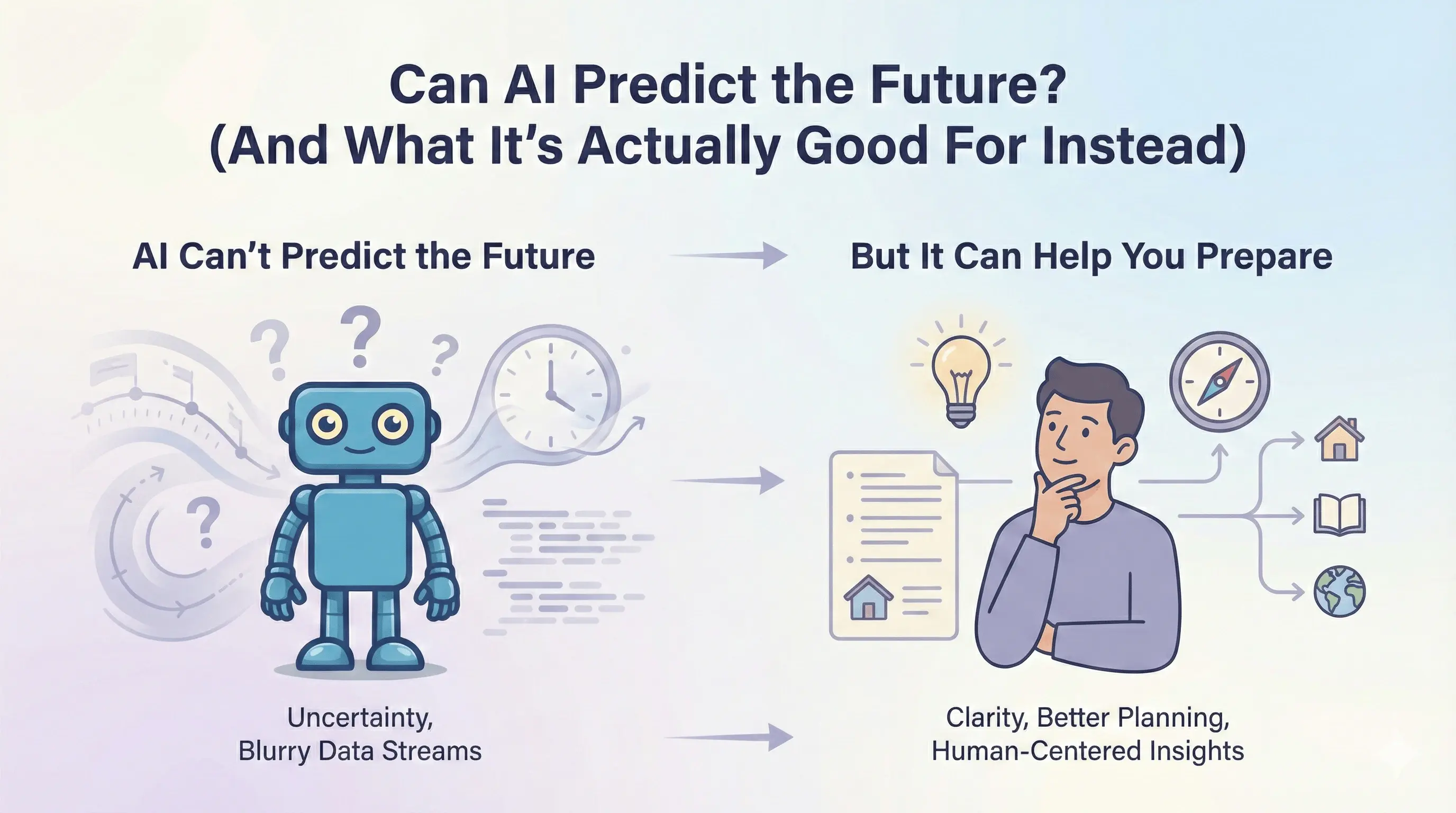
Short answer: AI can’t reliably predict the future. But it can help you prepare for it — thoughtfully, calmly, and without hype.
Right now, AI is often treated like a crystal ball. Headlines promise predictions about markets, careers, technology, and even personal life decisions. That framing creates unnecessary anxiety and unrealistic expectations.
This article takes a different approach. Instead of asking what AI can predict, we’ll focus on what it can actually help you do — and why that distinction matters.
Why AI Predictions Are So Often Misunderstood
AI systems are trained on historical data. They identify patterns in what has already happened — they do not understand intent, values, ethics, or consequences.
This is why AI predictions can sound confident while still being unreliable. Language fluency is not the same as foresight.
Human futures are shaped by decisions, context, and unpredictable events. No system can reliably forecast those outcomes.
The Real Strength of AI: Preparation, Not Prediction
When used correctly, AI becomes incredibly valuable — not as a predictor, but as a thinking partner.
- Clarifying goals and priorities
- Exploring trade-offs
- Reducing repetitive mental work
- Supporting creativity and planning
- Helping you slow down instead of react
This shift — from prediction to preparation — is where AI actually shines.
The 5‑Year Future Self Prompt
One of the simplest and most powerful ways beginners can use AI responsibly is through reflection:
Imagine you’re me, five years in the future, looking back at today.
What advice would you give me about:
- what to focus on,
- what to stop worrying about,
- and what will matter most?
Then suggest three small actions I can take this week.
This prompt doesn’t predict anything. It gives you perspective — and perspective is far more useful.
What You Should Focus On Instead
- Judgment: deciding what matters
- Context: understanding your situation
- Intent: setting direction
- Consistency: small actions over time
AI supports these human strengths — it doesn’t replace them.
AI Training for Business
For teams and organizations, we also offer AI training for business, including bulk access and light customization. The focus is on responsible adoption, clarity, and confidence — not hype.
Frequently Asked Questions
Can AI really predict the future?
No. AI analyzes patterns in historical data, but it cannot reliably predict complex future events — especially those involving human behavior, market shifts, or personal decisions. Confident-sounding AI forecasts are produced by pattern-matching systems, not by genuine foresight.
If AI can't predict the future, what is it actually useful for?
AI is most useful as a thinking partner — helping you clarify goals, explore options, reduce repetitive work, and think through decisions more carefully. The shift from prediction to preparation is where AI genuinely shines for most beginners and professionals.
How can I use AI to think about my future without relying on unreliable predictions?
Try using AI for reflection rather than forecasting. A prompt like "Imagine you're me five years from now — what would you tell me to focus on, stop worrying about, and do differently this week?" gives you perspective and practical next steps without pretending to know the future.
Keep learning: explore free guides, courses, and calm AI education at AIBeginner.net.