Something feels different in AI lately — and you’re not imagining it.
Quick takeaway: Yes, capability has meaningfully improved — especially in reasoning and in “agents” that can take actions — but the best response isn’t panic. It’s calm preparation.
AI readiness insight: When AI suddenly feels more useful, that is usually a signal to improve your organization's AI readiness rather than scramble for more tools. Clear guardrails, small pilots, and structured rollout plans matter more than hype.
Why this episode became a blog post
I opened a podcast episode with a listener question from Matt:
“Did something just change? AI seems like it suddenly leveled up. Should we be worried?”
This post is the written version of that conversation — designed to be easy to skim, easy to cite, and easy to act on.
The short answer: yes, things changed
In plain English: newer AI models are better at thinking through multi-step problems, following instructions, and staying consistent across longer tasks. And the biggest shift is that AI is increasingly moving from “answering” to doing.
What actually improved
- Reasoning: multi-step logic, better instruction-following, fewer “random” replies
- Tool use: AI can work with files, search, summarize, draft, and connect tasks into a workflow
- Agents: systems that can plan steps and execute actions (with your approval) are getting more reliable
- Speed of progress: improvements are shipping faster — what used to take years can now happen in months
Why it feels like a “switch”
When capability improvements stack on top of each other, they don’t feel linear.
A small upgrade in reasoning + better tool integration + faster responses can create a qualitative change in experience — like the tool crossed a threshold from “interesting” to “useful.”
That can be unsettling — especially if you haven’t been testing the tools regularly. One month they’re “fine,” and then suddenly they feel “next level.”
Should we be worried?
Let’s be honest without being dramatic:
- Yes — the world will adjust. Workflows will change. Expectations will rise.
- No — this isn’t a sudden overnight flip of society.
Technology shifts spread through adoption: teams experimenting, companies piloting, departments rolling out policies, individuals learning what’s useful and what’s risky.
Calm truth: The people who struggle most aren’t the ones who stay calm — they’re the ones who ignore the shift entirely.
What this means for work (and home)
At work
Expect more “AI-assisted” work to become normal:
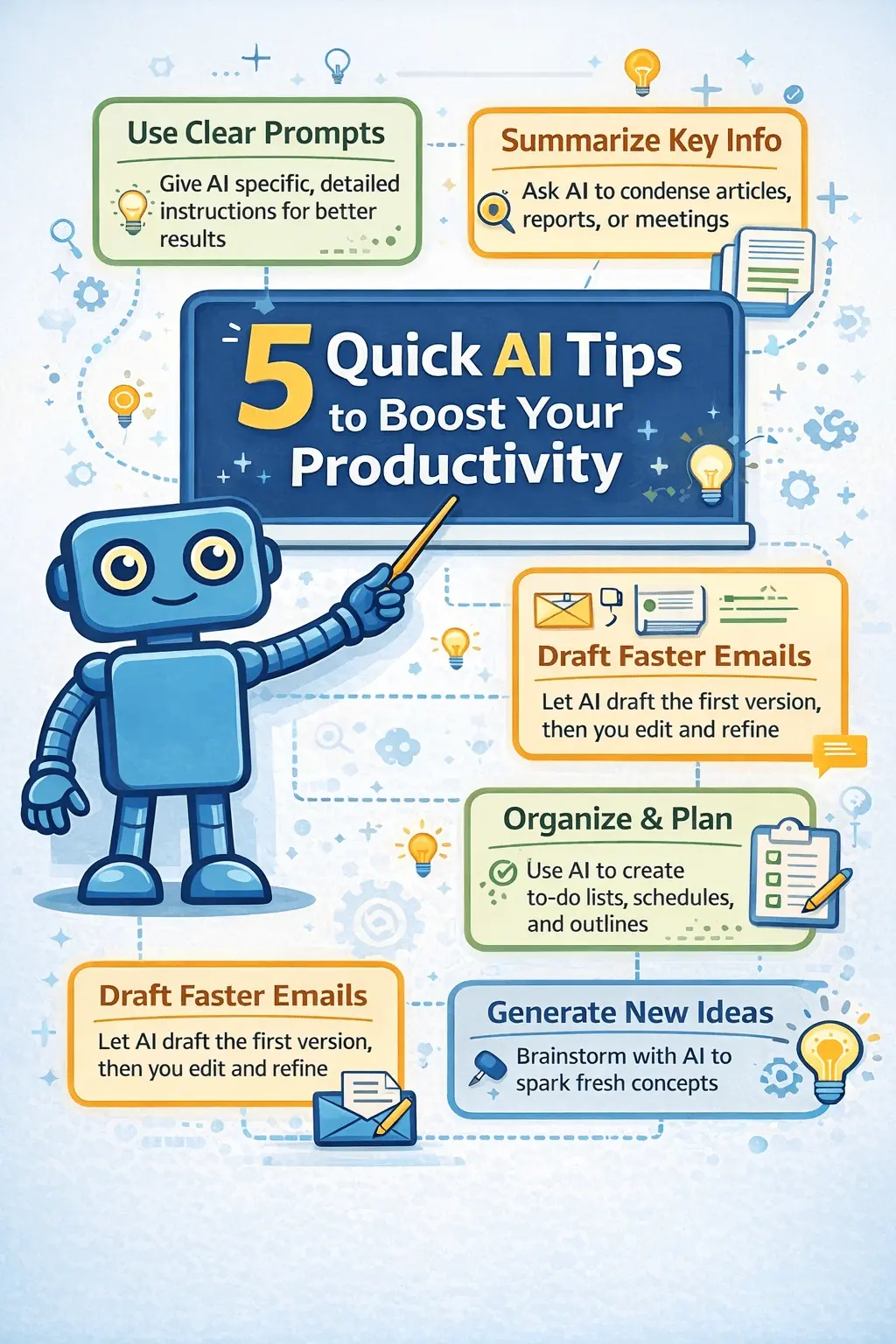
- Drafting and refining emails, proposals, and customer responses
- Summarizing meetings and documents
- Turning notes into plans, checklists, and next steps
- Searching internal knowledge faster (when governed properly)
The opportunity: higher output and better clarity. The risk: inconsistent use, privacy mistakes, and “copy/paste confidence.”
At home
AI is becoming a practical helper for everyday life:
- Meal planning, schedules, and routines
- Learning something new (without the “I’m behind” feeling)
- Writing and explaining things in simpler language
- Planning trips, projects, and purchases more efficiently
How to stay calm and prepared (a simple readiness plan)
You don’t need to “master AI.” You need a repeatable approach.
1) Choose one primary tool
Pick one AI tool you’ll practice with for 30 days. Consistency beats variety.
2) Pick one real workflow
Don’t start with abstract prompts. Start with a task you already do: email, summary, planning, research, writing, or brainstorming.
3) Use structured instructions
Instead of one question, give a short sequence:
- Summarize
- Identify risks
- Propose improvements
- Draft a response
4) Add “human-in-the-loop” as a habit
AI can accelerate work, but you still own accuracy. Verify claims, especially anything factual, medical, legal, financial, or policy-related.
5) Learn what not to share
At work, treat AI like any external service unless your organization has approved tools and clear policies. Avoid sensitive data and personal identifiers.
This week’s AI Hot Tip: run a test (don’t scroll headlines)
If AI feels like it leveled up, don’t guess. Test it.
Take one real task and give AI a structured, multi-step instruction. Push it slightly beyond a simple “write this email.”
Goal: move from spectator to operator. Understanding the tool reduces anxiety and increases confidence.
AI Doing Good: education is becoming more personalized
One of the most encouraging uses of AI is learning support.
AI tutoring tools can help students and adults get explanations tailored to their level — step-by-step, with different examples, at their pace. This doesn’t replace teachers. It supports them, and it expands access for people who never had a personal tutor.
Key takeaways
- Yes — newer AI models and agents are meaningfully more capable.
- No — the best response is not panic; it’s calm preparation.
- Pick one tool, practice one workflow, and build a verification habit.
- AI’s upside is real — especially in learning and productivity — when used responsibly.
Quick checklist: how to respond when AI suddenly feels more capable
- Choose one approved AI tool and use it consistently.
- Test AI against one real workflow, not random prompts.
- Decide what information should never be entered into AI tools.
- Keep a human review step for important facts, decisions, and customer-facing output.
- Evaluate your organization's AI readiness before expanding use across teams.
FAQ
Did AI really “level up” recently?
Yes — many people are noticing improvements in reasoning, instruction-following, and action-taking workflows. These changes can feel sudden when multiple upgrades stack together.
Are AI agents something I should pay attention to?
Yes. Agents are a shift from “answering questions” to “planning steps and taking actions.” They can be powerful, but they also require good guardrails and human review.
Will AI change jobs?
Yes — mostly by changing tasks inside jobs. People who learn to use AI as an assistant typically gain leverage. People who avoid it entirely can get left behind.
How do I start without feeling overwhelmed?
Pick one tool and one workflow. Practice for 10–15 minutes a few times per week. Keep it practical. Consistency builds confidence.
What’s the safest mindset to adopt?
Calm, curious, and responsible. Use AI to accelerate thinking and drafting — and keep a habit of verifying important details.
Related AI capability resources
If this shift has you thinking less about tools and more about preparedness, these resources will help you move from curiosity to structured action:
- What Is AI Readiness? — a plain-English explanation of organizational AI readiness, risk, and capability.
- AI Readiness Checklist — assess where your organization currently stands and review next-step recommendations.
- Complete AI Learning Path — a calm, structured path through four courses for building practical AI skills.
- AI Training for Business — team access to the Learning Path for professionals responsible for workflows, teams, and outcomes.
- AI Career Confidence — practical guidance for professionals who want to stay useful, credible, and steady as AI changes the workplace.
Practical next step: If AI feels like it suddenly changed, start by measuring readiness before expanding usage. That is the fastest way to reduce confusion and make better decisions.
Want a calm, step-by-step starting point?
If you want a structured way to build confidence without overwhelm, start the free 30-Day AI Roadmap:
Or explore the AI Beginner Academy for structured courses (individual and workplace-friendly options).